
Iowa Traffic Warrants Explained
A traffic citation in Iowa opens a court matter. What the citation requires of you shapes everything after that. Under Iowa Code §805.5, willfully failing to appear as a citation directs is a simple misdemeanor, and the court shall issue an arrest warrant for that failure-to-appear offense. That warrant is a court record. It attaches to one particular Iowa case. It can also sit apart from the original traffic charge, which may still need resolving on its own. For city citations and traffic cases across Iowa, the trial forum is the Iowa District Court. Its judicial officers handle traffic and scheduled-violation work based on jurisdiction and assignment. The county Clerk of Court keeps the case docket. A sheriff or the originating law-enforcement agency confirms whether service is actually pending. Remember that an Iowa citation FTA warrant is not the same thing as a DOT suspension for qualifying unpaid court debt. The two systems track different events.
Iowa Code §805.5 and Traffic Warrants
Iowa Code §805.5 kicks in when someone willfully fails to appear as a traffic citation directs. The statute makes that failure its own simple misdemeanor. It then directs the court to issue an arrest warrant for the FTA offense. So it is wrong to call every unpaid Iowa ticket an automatic warrant. Nonpayment and nonappearance are separate events. The Iowa case docket is where you see what the court has actually filed. From there, the warrant return and the charge follow ordinary Iowa court process. If you missed a date, ask the Iowa Clerk of Court whether an FTA count or warrant event appears and whether a hearing or motion is open to you. Paying the original citation may settle a fine. It does not by itself prove a separate FTA warrant has been recalled. Confirm that with the Iowa court and the serving agency before you assume anything.
Iowa FTA and License-Hold Systems
Iowa has no public statewide traffic-warrant lookup. No public license-hold search confirms a warrant either. The secure IOWA System serves authorized criminal-justice users only. Residents cannot search it. Iowa Courts Online offers a public case docket, and Iowa DOT handles certain nonpayment suspensions, while the county sheriff or issuing agency confirms warrant service in Iowa. DOT can show a driver-privilege issue without answering whether a court issued an arrest warrant. Iowa Code §321.210A permits a suspension for qualifying unpaid court fines after conviction plus the required notice and reporting steps. That path is separate from the §805.5 failure-to-appear process. The Iowa Courts traffic FAQ lays out the court's notice and payment routes, though its general timing statement concerns a fine suspension, not when a warrant issues. For the license side, the Iowa DOT nonpayment instructions describe the suspension process on the agency's subject page, which covers the program itself rather than any individual record or warrant result.
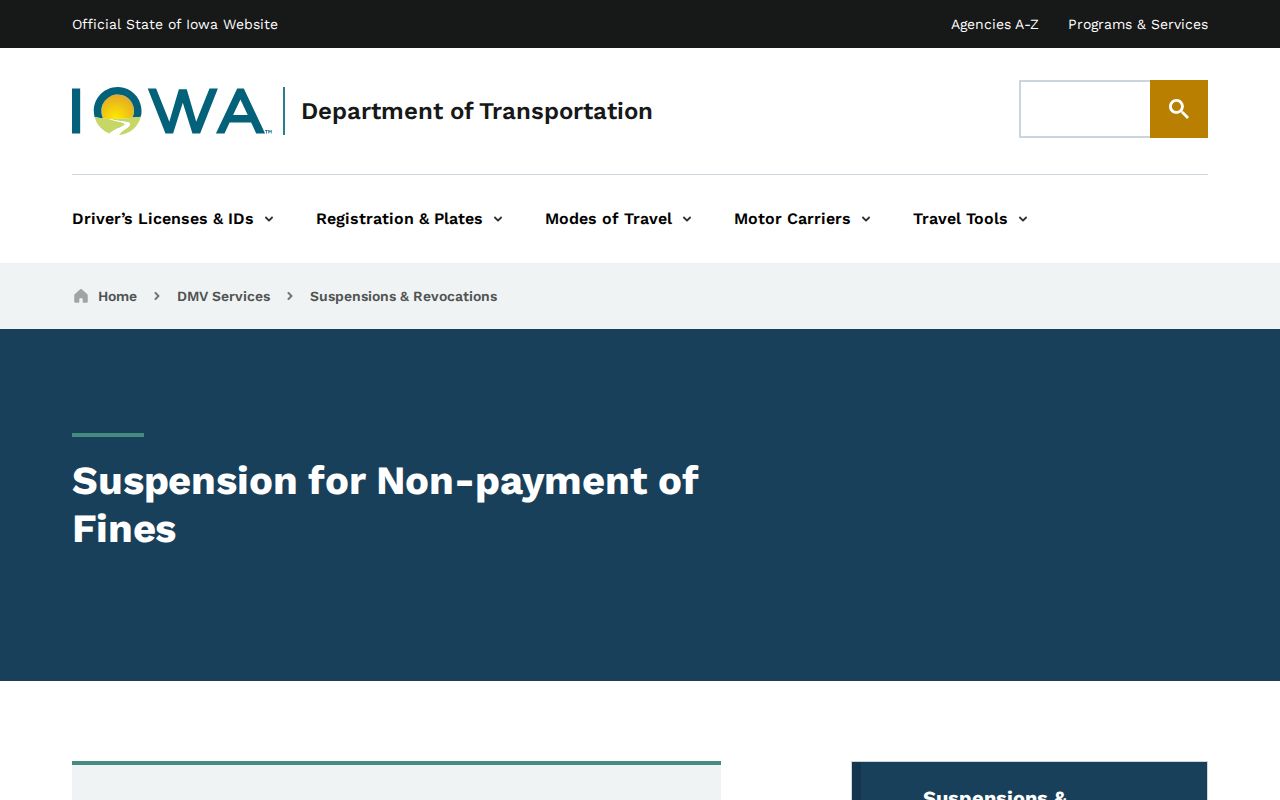
The DOT route covers qualifying court-debt suspensions. It does not replace the Iowa Clerk of Court or sheriff when checking an Iowa traffic warrant.
| System | What It Holds | Run By |
|---|---|---|
| Iowa District Court docket | Public citation and case events; not an active-warrant index. | Judicial Branch and county Clerk of Court |
| IOWA System | Secure law-enforcement inquiry; no public warrant access. | Iowa Department of Public Safety |
| Iowa DOT nonpayment process | Suspension for qualifying unpaid court debt after required steps. | Iowa DOT |
| County sheriff or issuing agency | Case-specific warrant service and operational status. | County or originating law enforcement |
| County Attorney Payment Plan (CAPP) | Payment plans for eligible fine-related suspensions; participation varies. | County attorney and court payment process |
Note: Iowa has no public statewide warrant or license-hold search that confirms a traffic FTA order.
Iowa DOT Suspension vs FTA Warrant
An FTA warrant and a fine-related suspension grow from different conduct. Iowa holds them in different systems too. Iowa Code §805.5 addresses willful failure to appear as a citation directs. Iowa Code §321.210A addresses qualifying unpaid court debt after conviction, notice, and reporting. An Iowa resident may need to fix one, the other, or both. A DOT status does not establish that a warrant exists. Likewise, a court payment does not itself prove DOT lifted a suspension. Timing differs as well. The Iowa Courts traffic FAQ says a license is generally suspended 75 days after a past-due fine, once notice steps run their course. That describes the fine-suspension process, not a warrant deadline, so the statutory sequence and case facts matter. Read the court file for the citation and any FTA event. Ask DOT about license status only when that separate issue applies.
Checking for an Iowa Traffic Warrant
Iowa publishes no public statewide traffic-warrant portal. The case sits with the Iowa District Court in the county named on the citation. That county's Iowa Clerk of Court can explain public docket entries, fine balances, hearings, and filing options. Iowa Courts Online helps you find the public case. It is not a live Iowa warrant confirmation system. An Iowa county sheriff's list, where one exists, may have limited scope. City police or a city attorney can help trace where a citation began. Even so, the Iowa court file remains a District Court record.
- Use the Iowa citation, case number, or court notice to identify the county and the case at issue.
- Search the Iowa public docket by citation or case information, and review the visible events and scheduled dates.
- Contact the Clerk of Court and the sheriff or originating agency through the Iowa county directory to confirm the warrant and service status.
- If the question is a fine-related license suspension, contact Iowa DOT separately; it is not a warrant search.
Not sure which county your Iowa ticket came from? The Iowa Judicial Branch court directory will point you to the right county court office. Even when an Iowa city wrote the citation, the docket itself lives in Iowa District Court. To pull an existing releasable record, you can file a public-record request under Iowa Code chapter 22 in person, by phone, in writing, or electronically. The Iowa Judicial Branch request page walks through how court records get routed. Keep one limit in mind. A request can release what the record already holds, but it cannot force out restricted information or generate a new warrant report for Iowa.
Iowa Courts Online: Warrant Limits
Iowa Courts Online lets the public search a name, date of birth, case ID, or traffic citation number. Searching by citation works. Just know that a citation number is not a warrant number. The help pages state that basic public docket information is free, while some documents, enhanced queries, and courthouse-terminal access carry their own conditions or costs. Fresh Iowa cases can lag. Expect up to a business day before a new case shows up. Once it does, docket events may update in real time, though clerks can take several days to file documents behind them. The application shows the public side of the court docket, not a statewide list of active traffic warrants. Restricted filings and newly issued process may be missing entirely. For the current status of a case, ask the Iowa Clerk of Court. For the law-enforcement side, call the agency that serves the warrant.
Note: A citation search locates a traffic case; it does not certify that a warrant is active or inactive.
How to Lift an Iowa Traffic Warrant
Only the Iowa court can resolve a failure-to-appear warrant. No statewide lift portal exists, and there is no universal warrant fee. Start with the Clerk of Court. Ask whether the case carries a separate FTA charge, what appearance or motion the court wants, and where the court debt stands. Iowa Courts' fine-payment instructions cover online payment, mail, and the Clerk of Court counter. Payment questions go to the Court Debt Payment Center at 515-348-4788 on weekdays, but that line cannot quote warrant status. A payment plan request goes to the Iowa county Clerk where the ticket arose, and the case and court process govern what happens next.
- Confirm the citation, FTA charge, and issuing District Court case with the Clerk of Court.
- Follow the court's instructions to pay the fine, appear, or request a payment plan if available.
- Ask the court what individual motion or appearance is required to address the warrant.
- Verify separately with the sheriff or issuing agency that service status changed after the court acted.
- If DOT still shows a suspension after full payment, submit proof of payment or contact DOT.
Caution: A court payment may not resolve a separate FTA warrant, and DOT proof-of-payment does not itself recall a court order.
County Attorney Payment Plan (CAPP) rules differ by county in Iowa. Ask the county attorney where the fine was owed. A CAPP plan can clear qualifying DOT suspension conditions tied to a fine. It is not a general way to resolve an outstanding warrant.
Note: Ask the Clerk and serving agency whether court action changed the warrant, even after a fine payment posts.
Iowa DOT Proof and Warrant Recall
The DOT proof-of-payment form exists for one job: showing that a citation or court fine was paid while a qualifying nonpayment suspension still sits on the driving record. The blank Iowa DOT form asks for identifying and case details, the payment receipt date, and supporting proof. The form arrives empty, with no personal information entered.
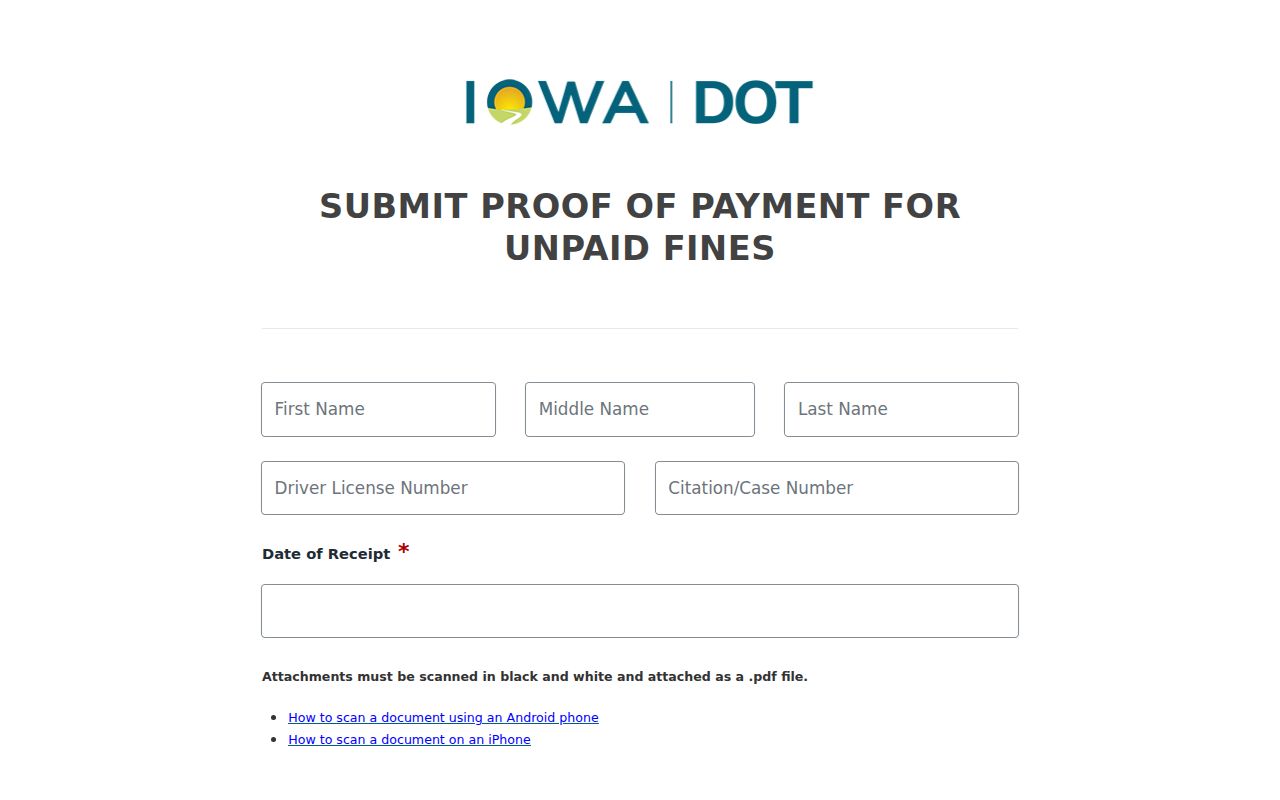
This form helps DOT reconcile an eligible fine-related suspension. It is not a warrant lookup, a court motion, or proof that a failure-to-appear warrant was recalled. Iowa DOT lists a $20 reinstatement fee for an eligible suspension, plus a $10 duplicate-license fee if a replacement credential is needed. The $20 is not a warrant fee. Paying it does not recall an arrest warrant. If a qualifying suspension remains after payment, submit proof through DOT's form or call 515-244-8725. Then ask the Clerk and the sheriff whether the Iowa court's warrant status has changed.
Note: DOT says its driving record does not update instantly after payment, so use its proof process and verify the court matter separately.
How a Traffic Warrant Differs From a Driver Record
An Iowa traffic warrant is court process tied to one case. A driving record is a driver-privilege record that may reflect a DOT suspension. They answer different questions. They also come from different offices. Checking one does not prove the status of the other. Warrant questions belong with the court and the law-enforcement agency serving the paper; fine-suspension questions belong with the court and DOT.
| Issue | Iowa traffic warrant | DOT driver record |
|---|---|---|
| Record | Court order or docket event in an Iowa District Court case. | Driver-privilege and suspension information held by DOT. |
| Question answered | Whether a court issued process and what case step is required. | Whether a qualifying fine suspension affects driving status. |
| Confirmation route | County Clerk of Court and sheriff or issuing agency. | Iowa DOT and the court about fine payment. |
| Payment effect | Payment alone does not prove a separate FTA warrant was recalled. | Eligible proof or payment may clear the corresponding suspension after processing. |
The Iowa Courts traffic-citation FAQ answers general court fine and appearance questions. It is general guidance, not a warrant lookup or an individual case record.
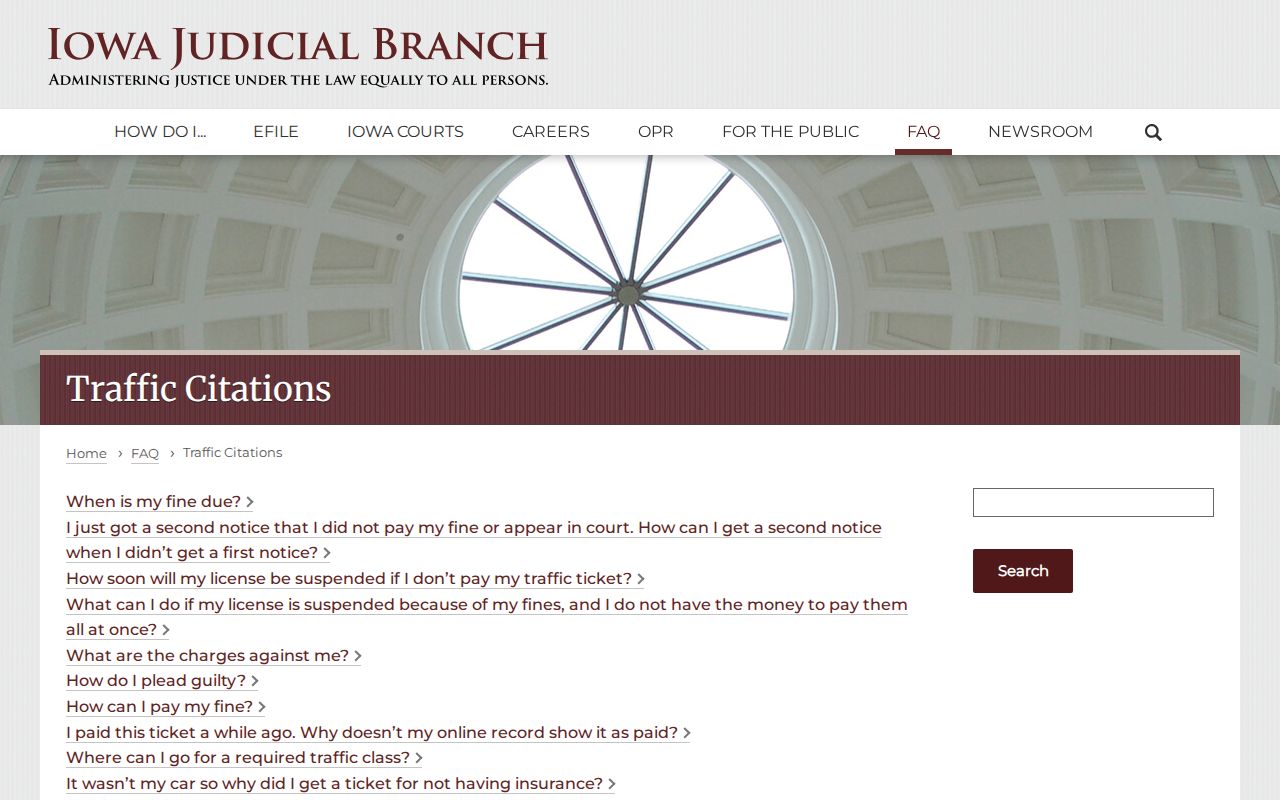
Use the FAQ for the Iowa court's general citation and payment information. For a specific case, confirm details with its Clerk of Court and the agency responsible for service.
No Public Iowa Traffic-Warrant Portal Exists
Iowa runs no public traffic-warrant portal. The secure IOWA System handles criminal-justice queries, but only for authorized agencies; the Department of Public Safety does not open it to residents. Iowa Courts Online covers courts statewide, yet it shows public docket material rather than a live warrant feed. The DOT's nonpayment page and proof form deal with eligible suspensions, not active FTA warrants. There is no public license-hold search by name, driver's-license number, or citation that tells you whether an Iowa court warrant exists. County publishing varies across Iowa too. An Iowa sheriff may post a list or explain an in-person check, though any list has its own scope and may miss cases. The reliable confirmation points remain the issuing court and the sheriff or other agency serving the warrant. Start with the county named on the citation. The Iowa county directory leads to the right Clerk of Court and local law-enforcement office. A blank result in one public system proves nothing.