
Iowa Municipal Court Warrants Explained
Iowa retired its municipal courts in the 1973 court unification. No city court tier exists today. So when people say "municipal court warrant," they mean a case that started with a city. City-ordinance cases and municipal infractions now proceed in the Iowa District Court. A city may write the citation or refer the complaint. The case itself belongs to the unified state court system, and Iowa sets no separate track for city matters. The Iowa county Clerk of Court maintains the District Court docket where the case is filed. Any Iowa warrant on that case is a court order. A sheriff or another authorized peace officer may handle service. There is no municipal-court clerk, no municipal judge tier, and no separate statewide city-warrant portal. To check a specific Iowa municipal warrant, begin with the county and citation that identify the District Court case.
Iowa's 1973 Unification Ended Municipal Warrants
Iowa once ran a tangle of small local courts. The 1973 Unified Trial Court Act swept them into one statewide trial-court system. The Judicial Branch history counts what disappeared: more than 500 justice-of-the-peace courts, 899 mayor's courts, 14 municipal courts, and 34 police courts. Those old labels explain the phrasing people still use. Someone hunting a "municipal court warrant" is chasing a court tier Iowa closed down decades ago. The numbers describe courts abolished, not warrants now outstanding. City ordinance cases and municipal infractions go through Iowa District Court today. For the story behind that shift, the Iowa court history page lays out the unification in detail. The Judicial Branch history of court unification covers the same ground from the system's own record. It is history, though. A live case runs through the county Clerk of Court, and that office is the working route for any Iowa warrant question.
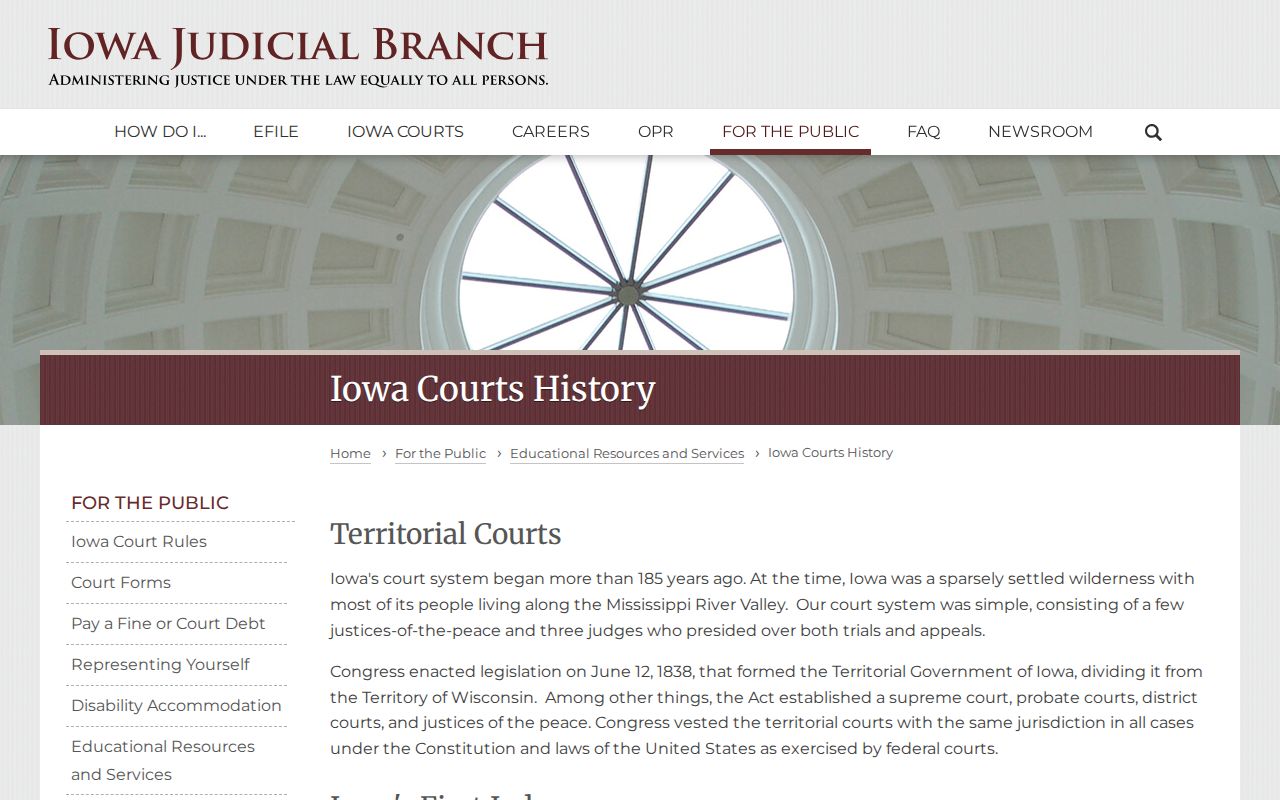
The shift moved where a city-origin case gets heard in Iowa. It never built a public municipal-warrant search site.
Note: Historical court counts explain Iowa's unification; they are not present-day counts of courts or warrants.
Municipal and County Warrants Compared
In Iowa, "city-origin" and "county-origin" describe how a matter began. Neither label creates a second court system. Both kinds of Iowa cases proceed in Iowa District Court. The difference lies in who wrote the citation or complaint and which local agency may know about service, while the filing county decides which Iowa Clerk of Court keeps the docket.
| Question | City-origin matter | Other county matter |
|---|---|---|
| How it begins | City citation, ordinance matter, or municipal infraction. | Complaint or other case opened through county law enforcement or prosecution. |
| Trial court | Iowa District Court, not a standalone city court. | Iowa District Court. |
| Docket holder | Iowa Clerk of Court in the county where the case is filed. | Iowa Clerk of Court in the county where the case is filed. |
| Service status | Confirm with the Iowa sheriff or originating agency. | Confirm with the Iowa sheriff or issuing agency. |
Whichever origin, the filing county and case number are the practical keys. A city citation never moves a case to a municipal court. Nor does a county-origin matter build a different statewide trial tier in Iowa.
Iowa Magistrate Roles in City Warrant Cases
Iowa's unified District Court assigns judicial work by case type and jurisdiction. District judges hear felony matters. They also take other assigned cases. District associate judges hold statutory jurisdiction that includes serious or aggravated misdemeanors and some class D felonies. Iowa judicial magistrates handle preliminary matters, simple misdemeanors, scheduled violations, traffic, small claims, and other assigned work. Each of these officers serves inside Iowa District Court. None is a city judge on a separate municipal bench. The Iowa Judicial Branch assignment explanation page sets out how case type and district drive assignment. A city-origin citation therefore follows those statewide rules. Iowa has no municipal judge or city clerk controlling a separate warrant docket.
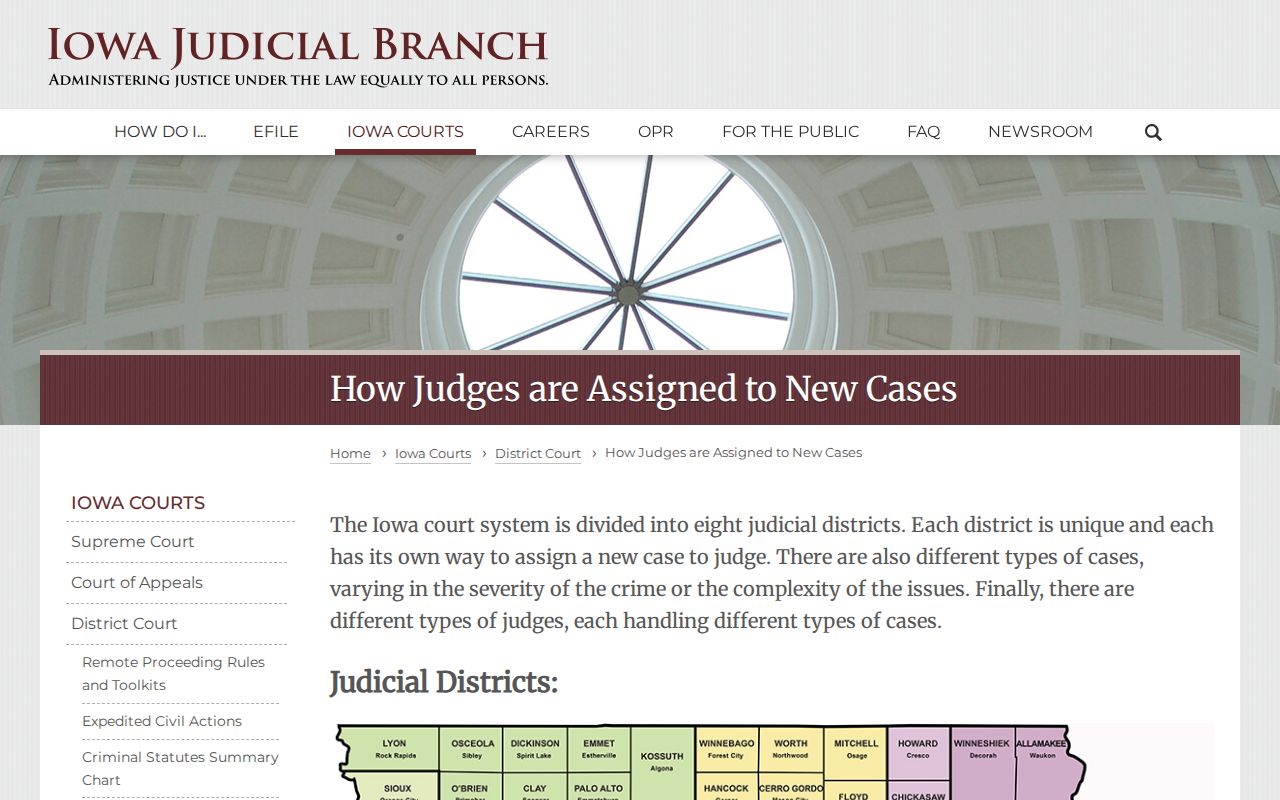
Rely on the docket and the assigned court for any specific case. Iowa offers no basis for guessing which judicial officer will handle it.
Note: Court assignment depends on the type of case and the judicial officer's statutory or assigned jurisdiction.
Checking an Iowa Municipal Warrant
Iowa offers no separate municipal-court warrant portal, and no public DPS warrant search either. The secure Iowa IOWA System serves authorized criminal-justice users only. Start instead with the county printed on the Iowa citation, court notice, or case paperwork. Then search Iowa Courts Online for public docket information. That search can show a case title, charge, events, disposition, and fine details. An unserved arrest-warrant application may stay restricted, though. The Iowa Clerk of Court in the filing county can identify the public record and explain how to ask about a hearing or filing.
- Use the Iowa citation or notice to identify the city matter, county, and any case number.
- Search the public Iowa Courts Online docket by citation, name, date of birth, or case ID.
- Reach the county Clerk of Court through the Iowa county directory and ask about the court record.
- Contact the sheriff or originating agency to confirm current service status and the court's process.
City police or a city attorney can help identify the originating citation. The docket and any motion route stay in Iowa District Court. County sheriffs may publish local warrant lists. Phone and in-person confirmation also vary. Channels and list scope differ by county. A request under Iowa Code chapter 22 can seek an existing public record in person, by phone, in writing, or electronically. The Judicial Branch records-request page handles court-record routing. Such a request cannot force disclosure of restricted material. Use the Judicial Branch court directory to find the filing county. Iowa has no municipal court clerk, municipal judge, or independent city warrant portal to search for.
Iowa Courts Online and City Warrants
Iowa Courts Online is the state's public docket search, and it answers case questions rather than warrant questions. It is not a statewide active-warrant index. A visitor can search by name, date of birth, county, case type, case ID, or citation number. Basic Iowa docket searching costs nothing. Some documents and enhanced searches take a subscription or a courthouse terminal. New Iowa cases may take one business day to appear. Document entry can take longer still. Confidential or restricted filings stay out of public view. The Iowa Courts Online search interface is where public case searches begin, with no names or case results on the entry screen and no municipal-warrant listing behind it.
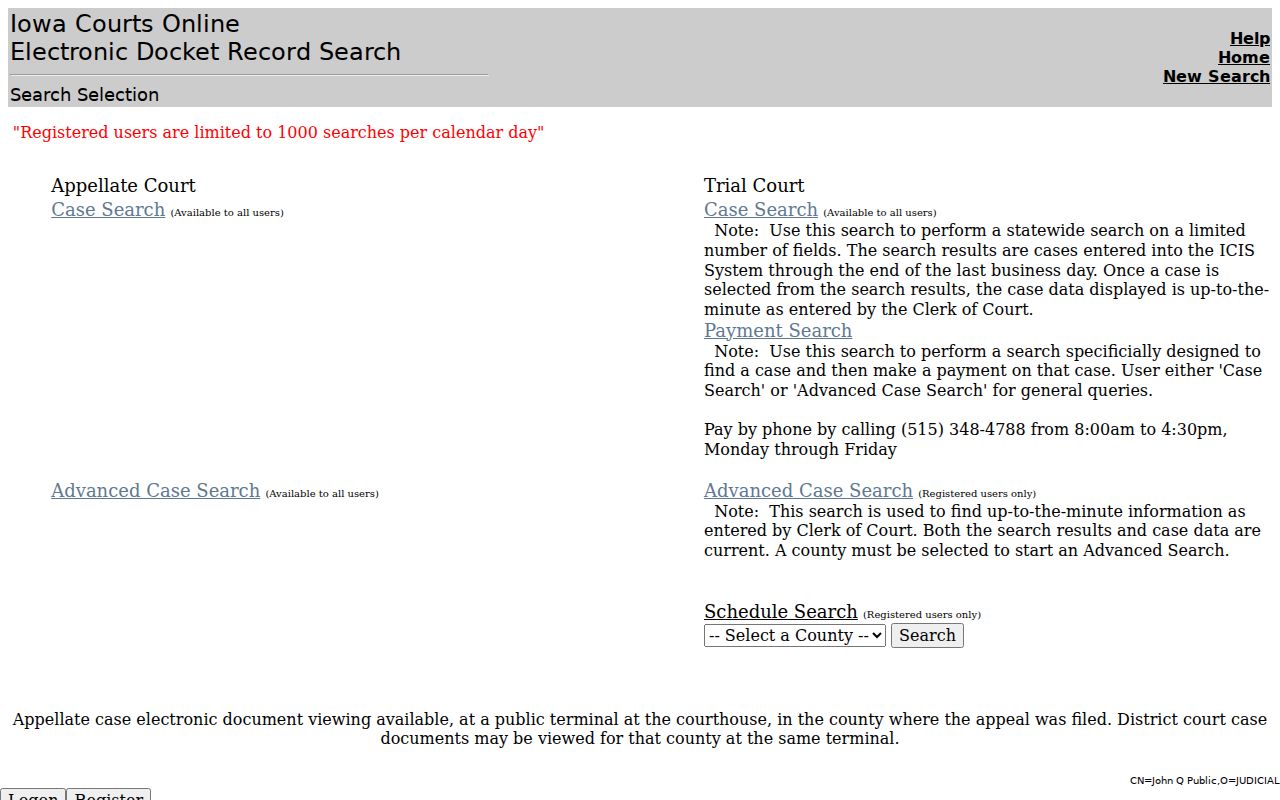
A blank search proves little. It does not rule out an Iowa warrant. If a city-origin case is absent or its warrant status is unclear, contact the county Clerk of Court and the sheriff or agency responsible for service.
Note: Iowa Courts Online displays public docket material; it is not a live confirmation that any specific warrant is active or cleared.
Inside an Iowa Municipal Warrant
Iowa publishes no separate statewide municipal-warrant form. No sample municipal-court entry exists either. What you get is the District Court case built from the city citation or ordinance matter. Iowa Courts Online may show public docket fields. Restricted warrant papers and current service details take a direct inquiry. The points below tell you where information can be confirmed, not a guaranteed document format.
| Case number | The public docket can show the case identifier; no separate statewide municipal-warrant number format was located. |
|---|---|
| City citation | The originating city or ordinance matter may be reflected in the case title, citation, or charge information. |
| Issuing court | The warrant is court process in Iowa District Court, not an order from a current standalone municipal court. |
| Fine or bond | Check the public docket and court order for case-specific amounts or conditions; there is no uniform city-warrant schedule. |
| Warrant papers | Unserved arrest-warrant information can be restricted under Iowa Code §804.29. |
| Service status | Ask the county sheriff or other responsible peace officer for current operational confirmation. |
Treat these as verification points. Iowa offers no municipal-warrant sample record. There is no promised Iowa form layout, so ask the Clerk of Court for the public docket and the serving agency for present warrant status.
Iowa City Cases and District Court Warrants
An Iowa city can start a citation or ordinance matter. The filing county's Clerk of Court still holds the Iowa District Court docket. That split explains why a city website may name the case's source while the court record sits under the county docket. The two offices keep no rival warrant lists. The specific case and assigned court control which filings are public and what response is due. For service, the agency that wrote or referred the citation may have useful context. The county sheriff or another peace officer can confirm current warrant status. Iowa Code §804.4 permits service anywhere in Iowa. Service is not confined to where the citation began. The issuing court and the serving agency may differ. Ask each office the question it owns. Iowa splits those duties by design.
How to Resolve an Iowa Municipal Warrant
Resolution runs through the Iowa District Court case. There is no separate municipal-court track. Call the Iowa county Clerk of Court to check whether the docket shows a warrant event, whether the relevant papers are restricted, whether a hearing is scheduled, and what motion or payment route applies. Then call the sheriff or serving agency. Ask about surrender or bond procedure. A city police office or attorney can help trace the original citation. Neither can substitute for the Clerk's case record or the court's ruling.
- Identify the county and case from the city citation, notice, or Iowa Courts Online docket.
- Ask the Clerk of Court about an appearance date, payment balance, and any individual motion available.
- Ask the sheriff or responsible agency how to confirm service status and follow the court's instructions.
- After court action, verify the docket and law-enforcement status separately; do not rely on a payment receipt alone.
Caution: Iowa Code §804.32 bars warrant-resolution clinics and substantially equivalent renamed events; use the regular individual court process.
Effective June 2, 2026, Iowa Code §804.32 bars warrant-resolution clinics. Iowa law still spells out the ordinary routes. Surrender to a peace officer, attend an already scheduled hearing, or file an oral or written motion in the pending case with notice to the prosecutor. The Iowa court decides whether relief is granted. Iowa sets no statewide resolution timeline. Nor does any rule give every Iowa warrant an automatic expiration date.
Note: Paying a city fine does not by itself prove that a separate FTA warrant has been recalled or that service status changed.
Iowa Warrant Steps After a Missed Hearing
An Iowa city citation that missed an Iowa District Court date does not create a municipal judge or city warrant clerk to call. Start with the county Clerk of Court. Ask whether the docket shows a failure-to-appear charge, a warrant event, a new hearing, or a restriction. For a traffic citation, Iowa Code §805.5 can make a willful failure to appear a separate simple misdemeanor. The court must then issue an arrest warrant. The original case and the FTA matter may both need attention. Ask the sheriff or responsible agency whether a warrant is treated as active. Ask what the lawful service or surrender steps are. A city police department or city attorney can help trace the original citation. The District Court still controls its docket and orders. With arrest risk or multiple cases, an Iowa attorney can make the inquiry and advise on an appearance or motion. An empty public search settles nothing. The Iowa court's record has the answer.