
Inside the Iowa Warrant System
Iowa runs one unified trial court, the Iowa District Court. Every Iowa case sits on a county docket there. A judicial officer may issue an arrest warrant once the complaint and probable-cause process is complete. Miss an appearance, and the court may issue process for that too. The Clerk of Court keeps the court record. A sheriff or another peace officer handles service. So the Iowa warrant system starts with one case and one court order, never with a statewide public search box. Behind that sits the criminal-justice information network that Iowa DPS supports for authorized agencies. That layer helps an officer query information. It makes no probable-cause decision. It never replaces the court's own record. Public access runs on a separate track through Iowa Courts Online and county offices, so a resident with a personal case should use the Iowa County Directory to reach the right Clerk of Court and the agency responsible for service.
IOWA Is an Authorized-User Network
The network's full name is Iowa On-line Warrants and Articles, shortened to IOWA. It is a secure Iowa criminal-justice information network. Iowa DPS Administrative Services and its CJIS ACT staff maintain the system and back agency training, certification, and audits. The Iowa Division of Criminal Investigation adds investigative and law-enforcement support. In short, this is an Iowa agency tool. It is not a public warrant desk or resident login. The DPS IOWA System page spells out authorized use and what the network does. It offers no public name search. There is no county selector, no warrant-type filter, and no participation map. The page is worth reading for context. It cannot tell an Iowa resident whether a particular order sits in the system.
IOWA carries law-enforcement queries and information exchange between agencies. Iowa publishes no warrant-entry rules and no feed the public can search.
Iowa DPS and the IOWA System
DPS Administrative Services supports and maintains IOWA for authorized criminal-justice users. The site does not provide public warrant access.
Iowa Statewide Warrant Databases
Iowa has no public statewide active-warrant database. IOWA is the statewide criminal-justice network, but only authorized users may query it. Iowa Courts Online does something different: public search of available trial-court docket information. Federal records run through federal court systems.
| System | What It Indexes | Run By |
|---|---|---|
| IOWA System | Restricted law-enforcement inquiries and criminal-justice information; no public warrant search | Iowa DPS Administrative Services / CJIS ACT support |
| Iowa Courts Online | Public portions of Iowa District Court dockets; not current warrant status | Iowa Judicial Branch |
| NCIC | National law-enforcement information, where an authorized agency enters a record | FBI; accessed by authorized agencies |
IOWA connects to NCIC and other criminal-justice networks. That connection does not put every Iowa warrant into those systems, and the public cannot search them. Federal warrants follow separate court and U.S. Marshals channels. A missing result settles nothing in another layer.
The Public Docket and IOWA Differ
Iowa Courts Online is a public case-docket search. It can locate an available court case by name, citation, or case number. It is not the IOWA System. It does not show every active warrant. The Iowa Judicial Branch says new case entries may take one business day to appear. Clerk-entered Iowa documents can take longer. Even where docket events show up, they do not reflect current service status. Still, the Iowa Courts Online search is a practical first step for a public case record. Follow it with a call to the Iowa county Clerk of Court and the sheriff or issuing agency. A request under Iowa's Open Records Law, chapter 22, may reach existing public records an agency holds. It cannot make a confidential warrant document public or create an index the government does not keep.
How Iowa County Warrants Reach the State
An Iowa case starts in Iowa District Court, where the judicial officer issues the warrant under the applicable process. A sheriff or another peace officer receives or serves the order. Authorized agency staff may then query IOWA and connected networks where records are entered. Public Iowa DPS information does not say which agency enters each warrant. It does not list warrant types, status codes, or entry timing either.
Possible information path: Iowa District Court / county agency › authorized IOWA query or entry, where applicable › connected law-enforcement networks such as NCIC, where a record is entered
There is no guaranteed automatic feed. Iowa publishes no county-by-county participation list or coverage matrix. Verify the case with the Iowa county that issued it rather than assume the warrant reached every database.
No Public IOWA Coverage Map Exists
DPS counts more than 450 law-enforcement and criminal-justice agencies on IOWA. That figure describes system use, not warrant coverage. It names no participating counties. It names no agencies that sit out. It counts no current warrants and lists no order types entered, so the number cannot back any claim that all 99 counties appear in a statewide index. A blank Iowa search result therefore means little. A public docket can omit a restricted document. A sheriff site may cover only its own records and dates. An authorized IOWA query may hit entry limits Iowa does not publish. Call the case county's Clerk and law-enforcement agency. The county directory links to each Iowa county hub for that next step.
Coverage caution: 450+ agency users does not prove that a specific county or warrant is indexed, current, or visible to the public.
Fugitive Warrants and the US Marshals
Iowa sits in two federal districts, Northern and Southern. Each has its own U.S. Marshals district. The Marshals Service works with state, county, local, and federal partners on federal warrant service and fugitive investigations. A joint operation may pull in several agencies. Its arrest total describes that one operation. It is not a count of all Iowa warrants or an annual statewide total. A federal warrant is not an Iowa county warrant. Federal cases belong to the relevant U.S. District Court, while Iowa state cases stay with Iowa District Court and the issuing county. Federal docket information is available through PACER, subject to its access limits. A docket search is not an active-warrant confirmation service. For a federal matter, identify the district. Contact its Clerk of Court, the proper U.S. Marshals district, or counsel. PACER's official landing page shows the federal access channel for Iowa cases, not any person's case or warrant.
Multiagency service does not change the answer. For an Iowa state warrant, the county court and its sheriff stay the right contacts.
One District Court Serves Iowa
Iowa runs one unified trial court. It serves all 99 counties through eight judicial districts. District judges, district associate judges, and judicial magistrates hear different types of matters inside that one system. There are no separate municipal, justice-of-the-peace, or county courts. The Judicial Branch's judge-assignment page explains how case type and jurisdiction affect assignment. City ordinance, traffic, and municipal-infraction matters also proceed in Iowa District Court. A city may issue a citation or join enforcement. The county Clerk keeps the docket. City police and the sheriff can both matter to service, depending on the case. Iowa has no standalone municipal-court warrant tier or public municipal warrant portal today.
Iowa Statewide System vs County List
The statewide and county layers answer different questions. The Iowa IOWA System is a restricted criminal-justice network. It is no public replacement for a county's case file or a sheriff's current service record. Iowa county procedures and any public list vary, and a list may state limits on dates or scope. Compare the channels. Then confirm the order with the office that holds it.
| Feature | Statewide System | County Warrant List |
|---|---|---|
| Public access | IOWA is restricted to authorized criminal-justice users | Availability varies by county; a public list may be limited |
| Record held | Connected Iowa information queried by authorized agencies | Iowa county court case file and local agency service record |
| Coverage | Public entry rules and county coverage are not published | County-specific scope and dates must be checked locally |
| Best use | Authorized agency law-enforcement inquiry | Case-specific court and sheriff confirmation |
Find the filing county first. The Iowa County Directory lists each one. A county page can help route a reader toward local records, but the Clerk and the responsible agency set the current status.
Fresh Warrant Details May Be Restricted
Iowa Code section 804.29 and Judicial Branch access rules bar public access to information filed to secure an unserved arrest warrant. The material may stay confidential for a while. Confidentiality lifts when an officer makes the arrest and warrant return, the defendant makes an initial appearance, or a court orders otherwise. A new Iowa warrant can sit off the public docket even while court process exists. That access limit is separate from what law enforcement can see in a restricted system. The Iowa Judicial Branch public-records request page handles court-held records. Iowa Chapter 22 requests go to the relevant office instead. Neither route promises a sealed record. Ask the Clerk what public case information exists. Then ask about service status. The sheriff or issuing agency answers that.
Iowa Warrant Technology and History
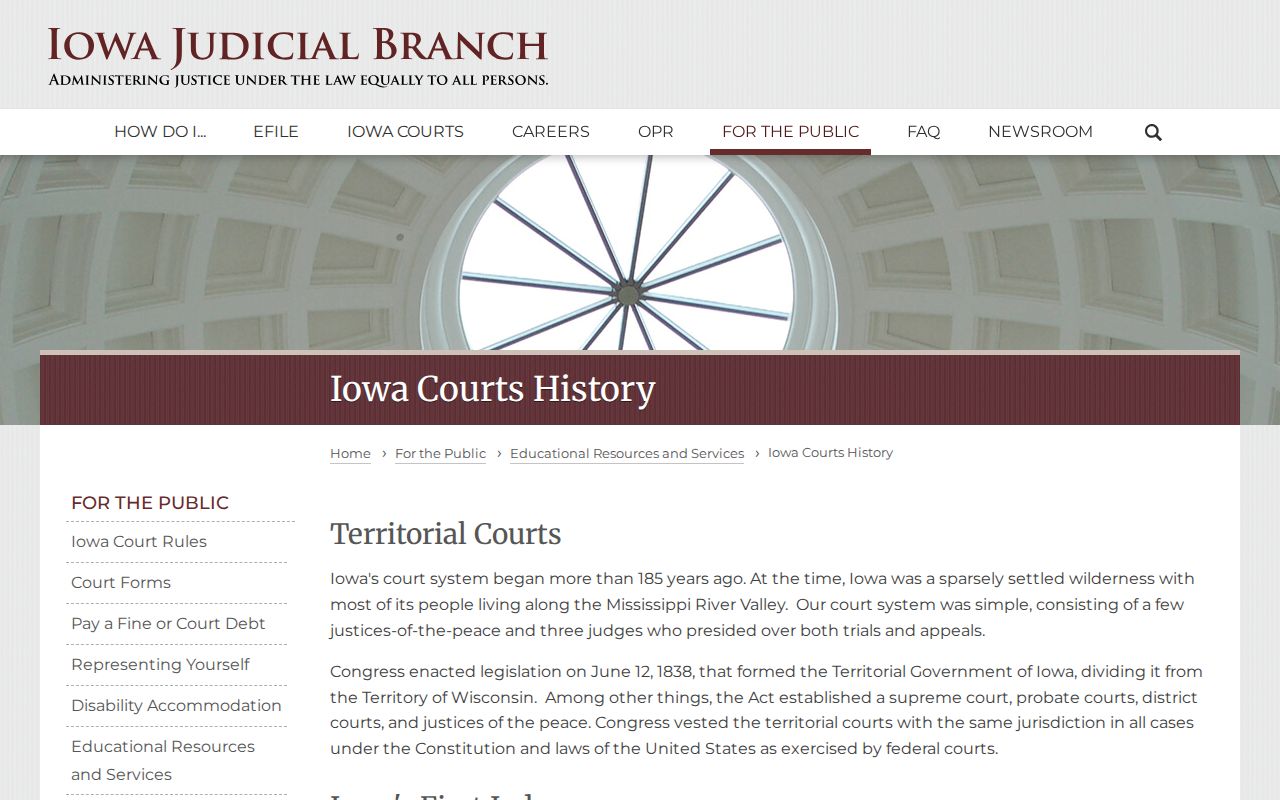
Iowa's court structure changed with the 1973 Unified Trial Court Act. The patchwork of justice-of-the-peace, mayor's, municipal, and police courts became one Iowa District Court, per the Judicial Branch history. So city cases now sit in county district court. The Iowa Courts history page gives the background. DPS was established in 1939. The Division of Criminal Investigation dates to 1921, created to give investigative skill and support across Iowa. DPS pages describe the current agency structure. IOWA controls appear there too. The IOWA network's launch date, vendor history, and a complete warrant data-entry schedule stay unpublished. The Judicial Branch's court-history resource traces Iowa's unified courts, not electronic warrant access.
Iowa moved its search-warrant applications online after a four-county pilot began in 2020, then took the system statewide in 2022. Officers now submit chapter 808 applications electronically, and judges review them the same way. Handy for them. It is not a public arrest-warrant search, though, and it opens no restricted arrest-warrant records to residents.
Iowa's 2026 Clinic Ban Leaves Individual Routes
Since June 2, 2026, Iowa Code section 804.32 has barred anyone from organizing or joining a warrant-resolution clinic, even one renamed to look different. A Polk County clinic announced before that date is history now, not a current option. The enacted Iowa law spells out what individuals can still do through ordinary court process. Those Iowa routes are straightforward. You can surrender to a peace officer or a law-enforcement agency. You can appear at a hearing already scheduled through normal procedures. Or you can file your own written or oral motion in the pending case, with notice to the prosecutor. The court then rules on that motion under its regular process. Ask the county Clerk about case procedure, and talk with an attorney about a specific warrant. Iowa has no statewide amnesty calendar and no warrant-clearing portal.